What Is VAT in Germany and How to calculate vat in Germany?
When your business is selling products or services in Germany, it is necessary to know about VAT in Germany to remain in compliance and to avoid paying hefty fines. Value Added Tax (VAT) has a bearing on almost all business dealings, whether you are a local company, an importer or an international company venturing in the German market.
Germany boasts the most organized VAT system in Europe which is in line with the European Union VAT directives yet has country specific rules and rates. Businesses should pay proper VAT rate and keep proper records, file VAT returns and pay taxable VAT correctly.
This guide will tell you all about German VAT, including the latest rates of VAT, the methods of its calculation, the VAT refund, and the way the contemporary ERP software can make the management of VAT easier.
What Is VAT in Germany?
VAT in Germany is a consumption tax levied on most goods and services marketed in Germany.
VAT is paid up the supply chain, rather than just by the final consumer. All VAT registered businesses impose VAT on the sales (Output VAT) and claim the VAT on purchases of business (Input VAT).
The difference is then paid to the tax authority by the business.
Simple Example
A manufacturer sells goods for:
- Product Price: €1,000
- VAT (19%): €190
- Total Invoice: €1,190
If the manufacturer previously paid €95 VAT on business purchases:
- Output VAT = €190
- Input VAT = €95
VAT Payable:
€190 − €95 = €95
Only the value added at each stage is taxed.
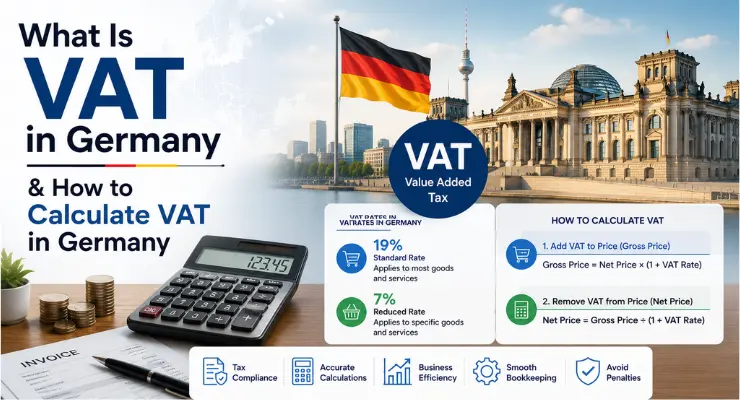
VAT Germany: Current VAT Rates
The VAT Germany system currently includes multiple VAT rates depending on the type of goods or services.
| VAT Rate | Applies To |
|---|
| 19% (Standard Rate) | Most goods and services |
| 7% (Reduced Rate) | Food, books, newspapers, public transport, certain cultural services |
| 0% | Certain exports and intra-EU supplies (subject to conditions) |
Germany has the common EU VAT rate of 19%, which is the standard rate.
Examples of the 19% rate include:
- Electronics
- Clothing
- Furniture
- Consulting services
- Software
- Professional services
Some of the reduced 7% rates are:
- Bread
- Milk
- Fresh vegetables
- Printed books
- Museums
- Newspapers
Businesses are reminded to check the VAT rate before sending out an invoice.
Germany’s VAT tax regulations require companies to register when they:
The PJs are able to run a business in Germany as well.
- Provide taxable goods/services
- Bring imports to Germany
- Hold stock in Germany
- Deal with marketplaces which are VAT registered for selling
- Operate in accordance with registration requirements, including exceeding registration thresholds as applicable
German VAT registration is often necessary for international companies, even if they do not have any office in Germany.
On registration, businesses are sent a German VAT Identification Number that is then used for tax reporting and issuing invoices.
VAT Calculator in Germany
Once you know the rate of VAT, it’s easy to calculate it.
There are two basic calculations:
Adding VAT
Formula:
The VAT Rate is the rate during the period that the sale was made.
Example:
Net Price = €500
VAT Rate = 19%
VAT:
€500 × 19%
= €95
Total Invoice:
€500 + €95 = €595
Removing VAT
Occasionally, VAT is included in the total price.
Formula:
Net Price = Gross Price / (1 + VAT Rate)
Example:
Gross Price = €595
VAT Rate = 19%
Net Price:
€595 ÷ 1.19
= €500
VAT:
€595 − €500
= €95
VAT Calculator Germany: Manual Example
A lot of businesses rely on a VAT calculator Germany tool, which can help them save time by quickly calculating the VAT.
Let’s work out another example.
Invoice Details
Net Sales:
€2,000
VAT Rate:
19%
VAT Amount:
€2,000 × 19%
= €380
Invoice Total:
€2,380
When business costs were:
Purchase Cost:
€800
VAT Paid:
€152
VAT Return:
Output VAT = €380
Input VAT = €152
VAT Payable:
€380 − €152
= €228
This is what is due to the tax authority.
VAT Payable calculation:
Each VAT return will show a comparison of:
Formula:
VAT payable is calculated as: Output VAT – Input VAT
Scenario 1
Sales VAT:
€8,000
Purchase VAT:
€5,500
VAT Due:
€2,500
Scenario 2
Sales VAT:
€4,000
Purchase VAT:
€5,200
Result:
The Input VAT is higher than the Output VAT.
Depending on the German tax regulations, the business can either claim for a VAT credit or offset it.
VAT Tax Refund Germany:
VAT tax refund Germany is related to the type of visitor, either business or travelers.
Business VAT Refund:
The VAT can be recovered on eligible expenses such as:
- Office rent
- Equipment
- Professional services
- Business travel
- Software subscriptions
- Inventory purchases
Claims are made via the VAT return.
Tourist VAT Refund:
For persons coming from outside the European Union (EU), VAT is refundable on purchases if:
Export of goods from the EU.
- The minimum purchase requirements are satisfied
- Customs validation is done (required)
The participating retailers provide tax-free documentation.
Refunds may differ from retailer to retailer, and refund service provider to refund service provider.
Here are the typical VAT errors made by businesses:
VAT problems are common amongst many businesses, due to:
- Charging the incorrect rate of VAT
- Missing VAT invoices
- Incorrect invoice formatting
- Manual spreadsheet errors
- Late VAT returns
- Inaccurate input VAT claims
- Poor record keeping
These errors can result in:
- Financial penalties
- Interest charges
- Tax audits
- Delayed VAT refunds
Automation greatly reduces these risks.
The ease of ERP Software in complying with VAT:
As business expands it becomes difficult for manual VAT calculation.
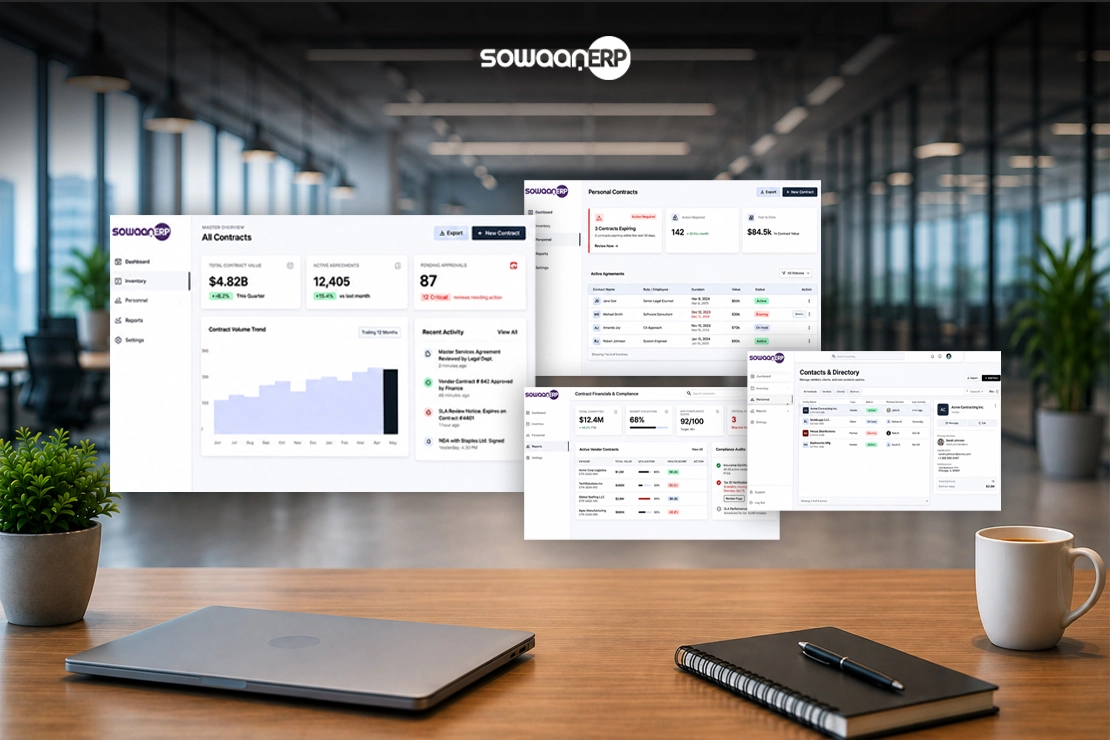
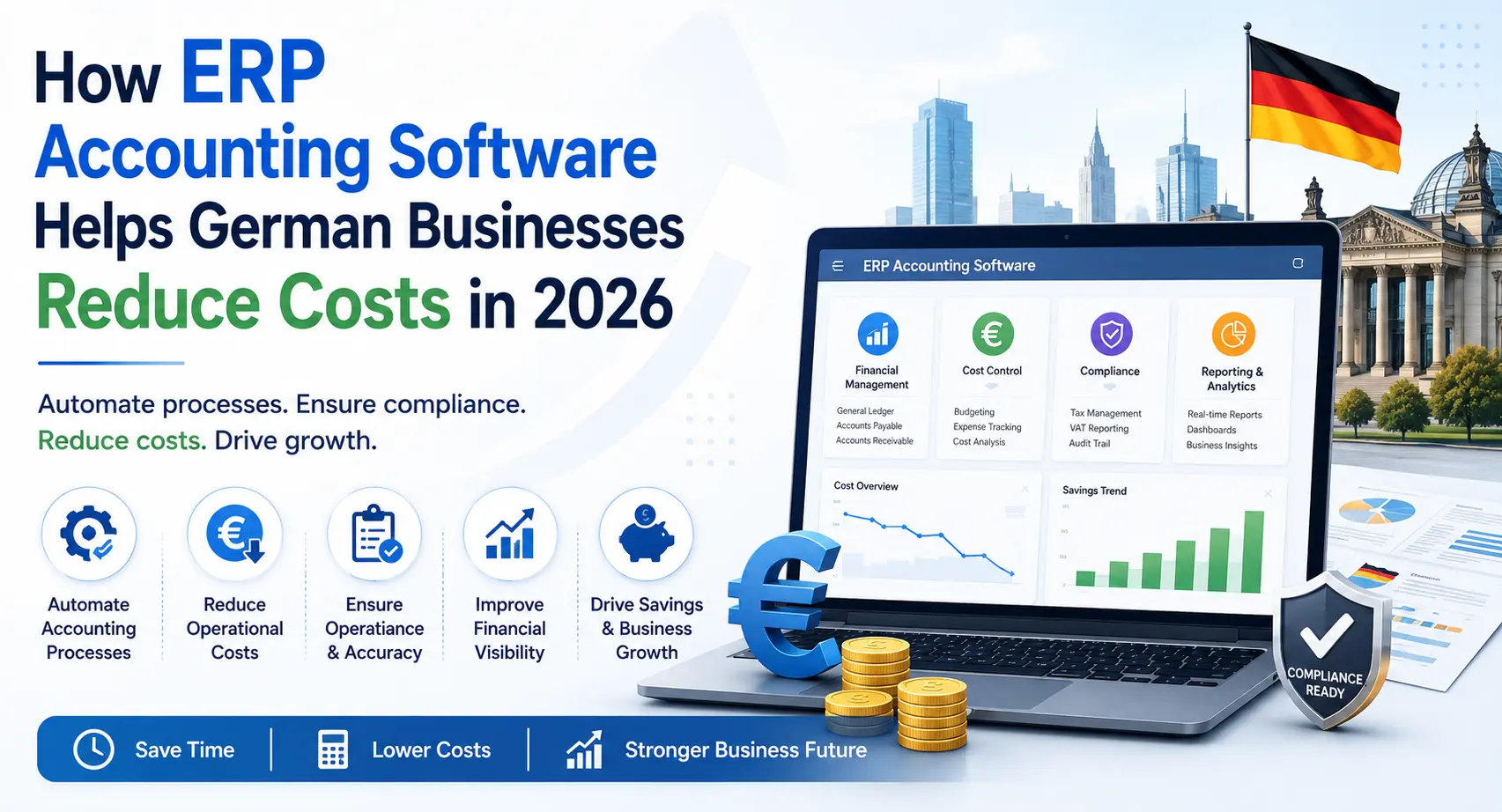
Modern ERP Software Deutschland automates the VAT management process by calculating VAT, creating compliant invoices, keeping track of transactions, and preparing VAT reports.
Key benefits include:
Automatic VAT Calculation:
ERP is applied automatically:
- 19% VAT
- 7% VAT
- Zero-rated transactions
This helps cut down on manual mistakes.
Real-Time Tax Reporting:
Businesses can get real-time insights into:
- Output VAT
- Input VAT
- VAT payable
- VAT refunds
- Monthly liabilities
Finance teams never find themselves in the dark when it comes to their tax position.
Automated VAT-Compliant Invoices:
ERP software provides invoices with the following information:
- VAT registration numbers
- Tax amounts
- Correct VAT rates
- Invoice numbering
- Customer information
This facilitates businesses to meet German invoicing requirements.
Better Record Management:
ERP systems securely store:
- Sales invoices
- Purchase invoices
- Credit notes
- VAT reports
- Supporting documents
All is tidy for audit.
Multi-Country VAT Support:
ERP systems are capable of supporting businesses throughout Europe by:
- German VAT
- EU VAT rules
- Cross-border transactions
- Multi-currency accounting
- Multi-language invoicing
This is particularly beneficial for international expanding companies.
Here are some reasons why businesses are choosing to go the cloud route when it comes to VAT and ERP software:
Cloud ERP software is beneficial in numerous ways as compared to the traditional accounting system.
These include:
- Automatic tax calculations
- Reduced compliance risks
- Faster month-end closing
- Centralized financial data
- Real-time dashboards
- Improved audit readiness
- Secure cloud backups
- Simple accounting & finance integration
Tax calculation is out of the way for finance teams, giving them more time to analyze business performance.
Best Practices for VAT Germany:
To comply with the German VAT rules:
- Use the appropriate VAT rate for all sales.
- Complete records of all payments and receipts.
- Check supplier VAT details as necessary.
Completes VAT returns within the required deadlines.
Go for ERP rather than spreadsheet tax calculation.
- Check VAT reports prior to returns.
- Provide training for finance staff about the VAT rules in Germany.
These practices help reduce compliance risks and improve financial accuracy.
Conclusion:
VAT in Germany is a key aspect of business operations in the German market. It is important to apply the correct VAT rates, calculate the VAT payable, and report it correctly and on time to ensure compliance.
Manual calculations might suffice for small businesses, but for growing organizations, ERP solutions that automate VAT calculations, generate compliant invoices, and provide real-time tax reporting can make a big difference.
Combined with the appropriate processes and cloud ERP software, businesses can minimize mistakes, streamline compliance, and prioritize sustainable growth.